For cat owners, the quest for a Smell-Free Cat Litter Box can feel endless. Lingering odors disrupt home comfort, but with the right tactics, maintaining a fresh litter area is simple. This guide shares 10 actionable tips to eliminate smells, from litter selection to cleaning hacks.
1. Choose the Right Litter Type
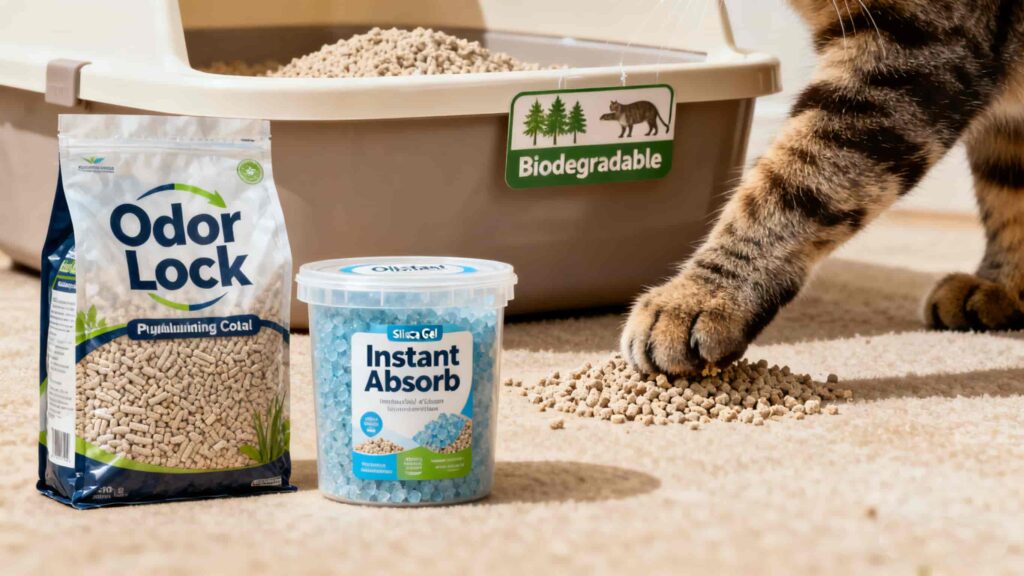
The foundation of a Smell-Free Cat Litter Box starts with litter. Clumping clay excels at trapping urine, while silica gel crystals absorb moisture and neutralize odors instantly. For eco-conscious households, natural options like pine or wheat-based litters offer biodegradable benefits. Experiment with textures—cats prefer what’s comfortable, and consistent use prevents accidents.
2. Scoop Daily and Replace Litter Often
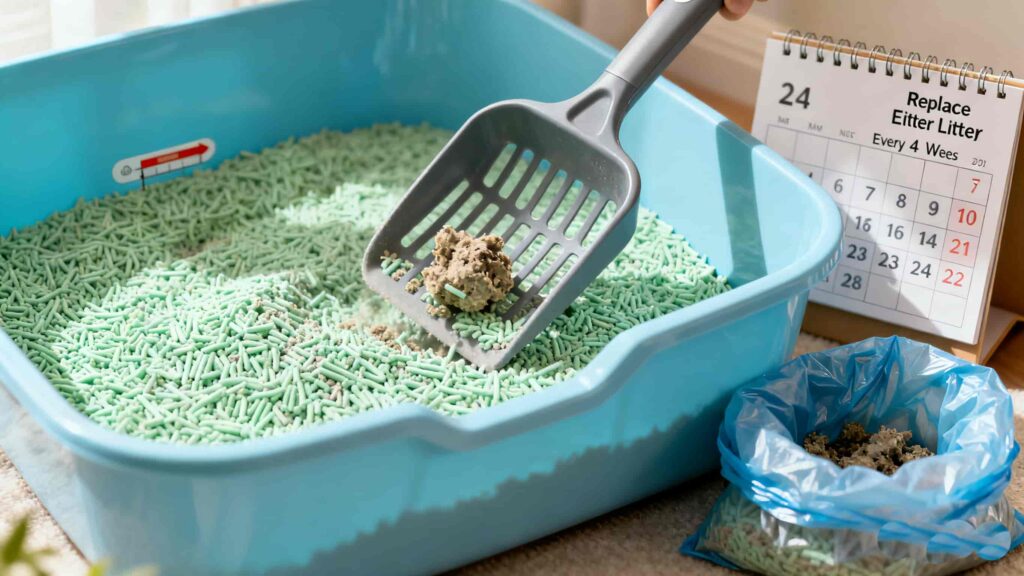
Daily scooping is non-negotiable. Waste left behind ferments, releasing ammonia and bacteria. Pair this with a full litter replacement every 2–4 weeks to reset absorbency. Use liners for easy cleanup and avoid overfilling the box, as excess litter traps odors deeper.
3. Invest in a High-Quality Litter Box
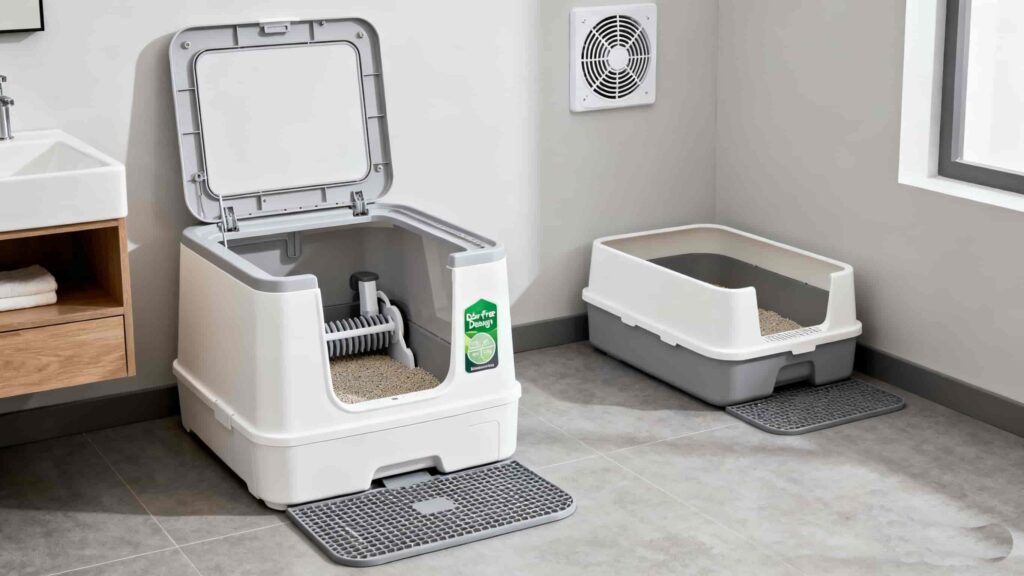
Not all boxes are equal. Opt for large, open designs to prevent odor buildup in enclosed spaces. Self-cleaning models with automatic rakes or sifting trays reduce daily maintenance. For multi-cat homes, place multiple boxes in quiet, accessible areas to avoid overcrowding.
4. Use Odor-Neutralizing Additives
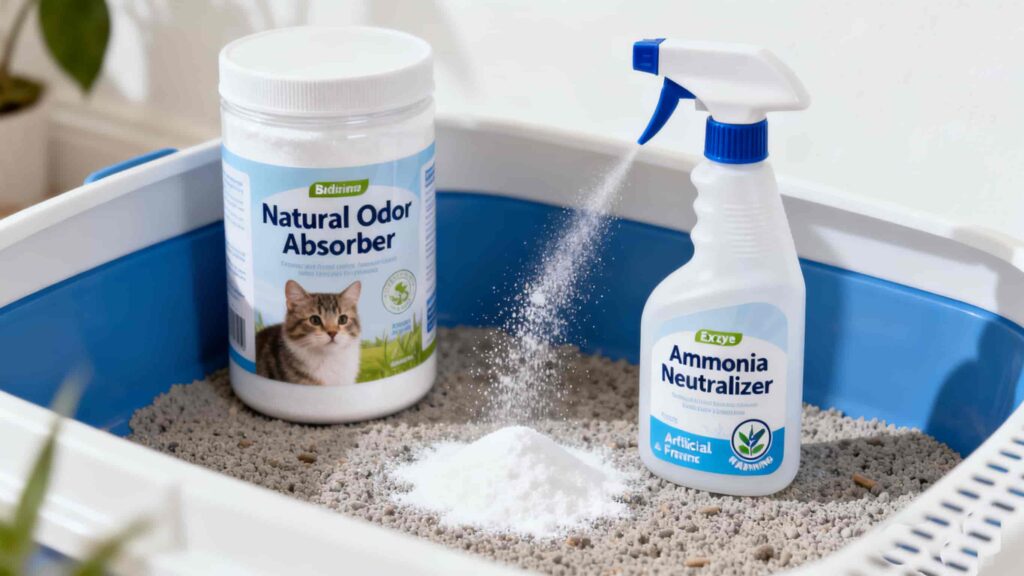
Baking soda is a budget-friendly hero. Sprinkle a thin layer at the box’s base before adding litter to absorb smells. Commercial enzyme-based sprays break down ammonia and bacteria without overwhelming scents. Avoid heavily fragranced products—cats may reject scented boxes.
5. Optimize Box Placement
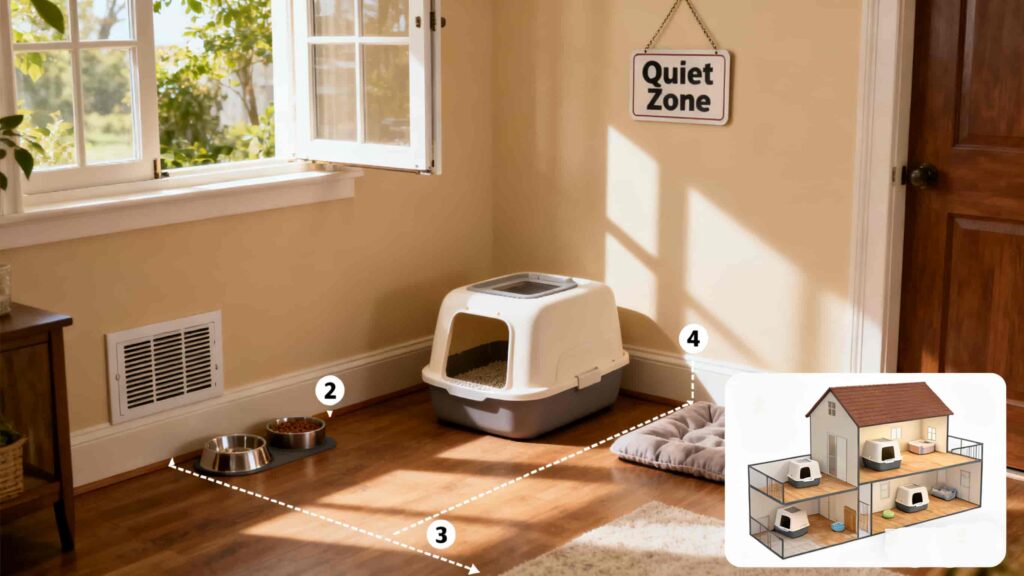
Location impacts freshness. Place the box in a low-traffic, well-ventilated area away from food bowls and bedding. Enclosed spaces like closets trap odors, while multiple floors demand a box per level. Quiet zones encourage consistent use.
6. Clean Accidents Immediately
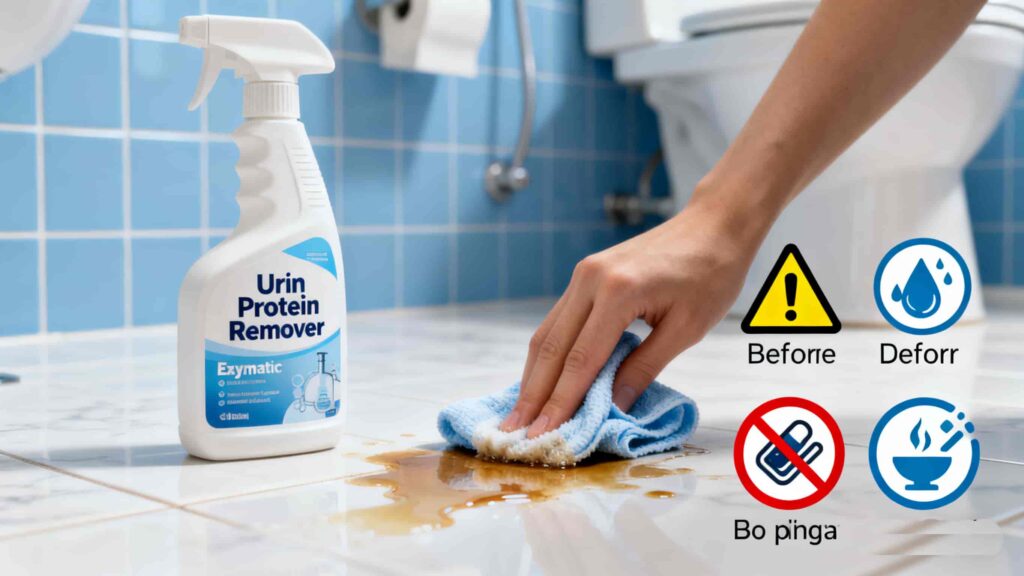
Even with a Smell-Free Cat Litter Box, accidents happen. Use enzymatic cleaners to break down urine proteins and eliminate odors. Avoid ammonia-based products, as they mimic cat urine smells and may trigger repeat marking. Blot—don’t rub—to prevent stain spread.
7. Add a Litter Mat to Trap Debris
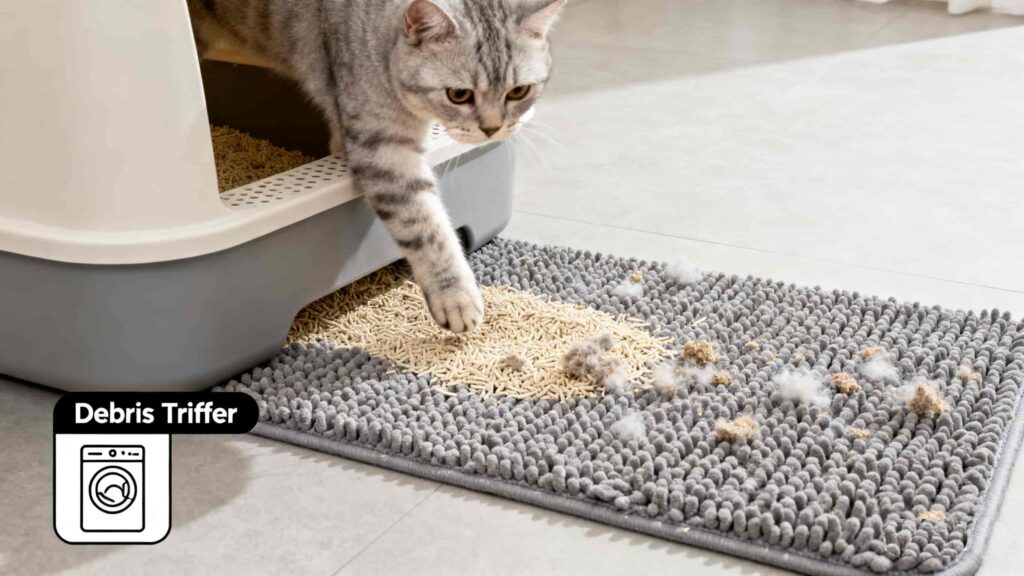
Stray litter outside the box worsens odors. Place a textured mat at the entrance to trap debris. Washable mats simplify cleanup and reduce tracking. This step minimizes the spread of waste particles and keeps floors cleaner.
8. Monitor Your Cat’s Health
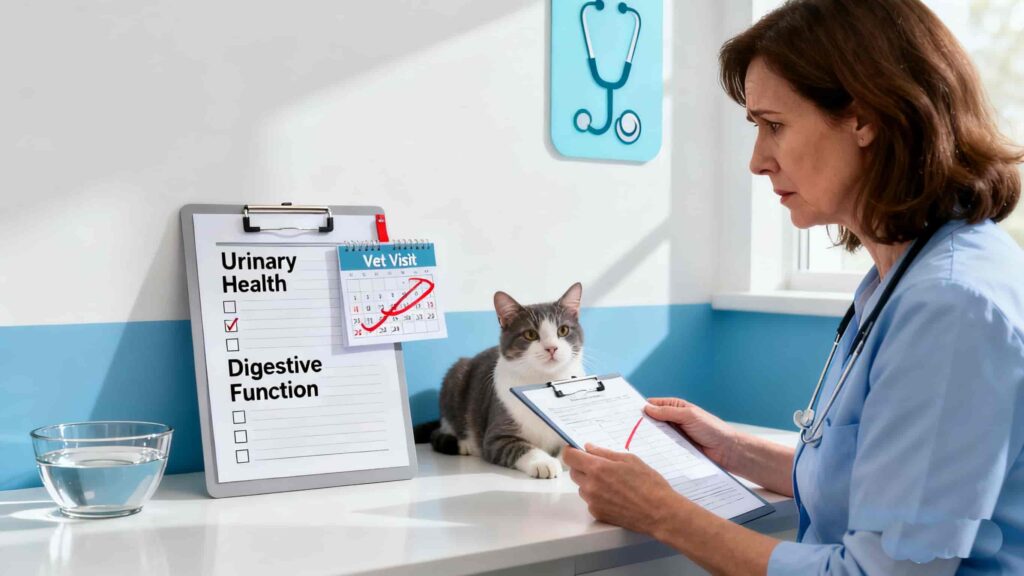
Persistent odors could signal health issues. Strong ammonia smells may indicate dehydration or urinary infections, while foul feces could point to digestive problems. Schedule a vet visit if smells persist despite proper care. Early detection prevents complications.
9. Try Activated Charcoal Inserts
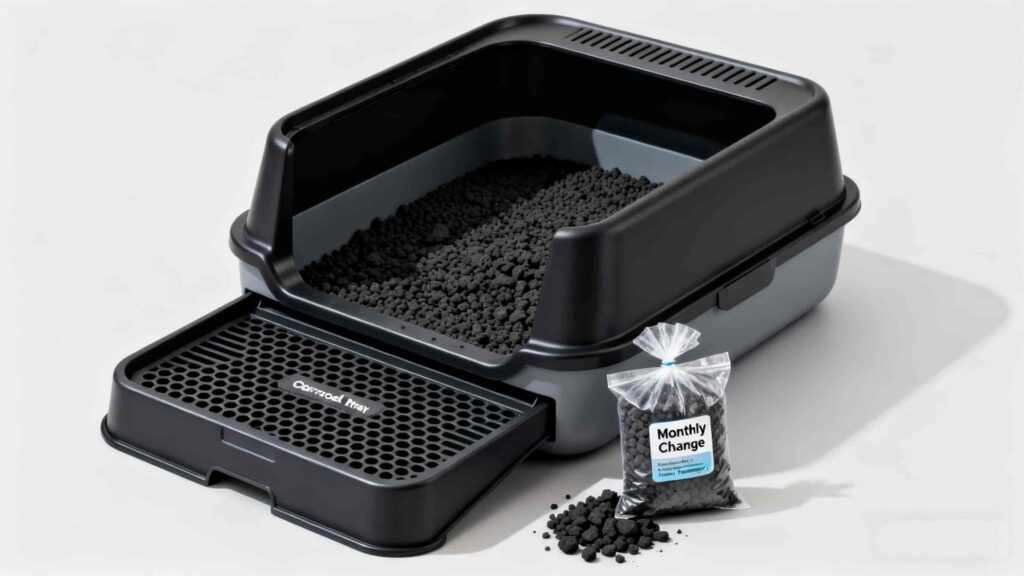
Some litter boxes include activated charcoal filters that trap odors. Replace these monthly for peak performance. Alternatively, place charcoal sachets near the box as a budget-friendly hack. These inserts work silently to neutralize smells between cleanings.
10. Stay Consistent With Maintenance
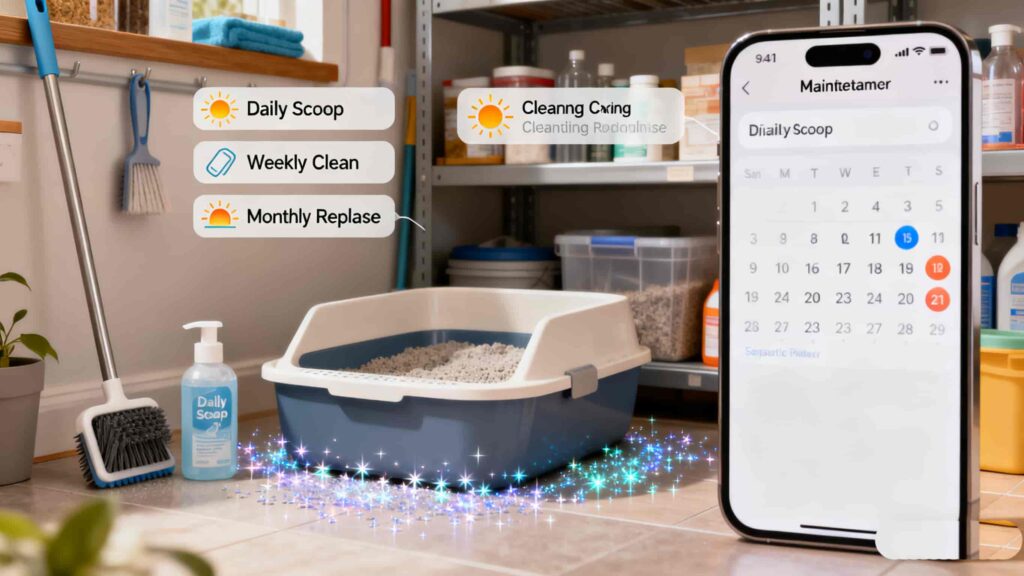
A Smell-Free Cat Litter Box thrives on routine. Set reminders for daily scooping, weekly deep cleans with mild soap, and monthly litter replacements. Consistency prevents odor buildup and ensures your cat always has a clean, inviting space.
Conclusion: Freshness Made Simple
Achieving a Smell-Free Cat Litter Box doesn’t require expensive gadgets—just smart choices and dedication. By selecting the right litter, maintaining a strict cleaning schedule, and addressing health issues promptly, you can create a fresh, comfortable environment for both you and your cat. With these 10 tips, pet care becomes a breeze, not a burden.
 Petsupplysgrove